


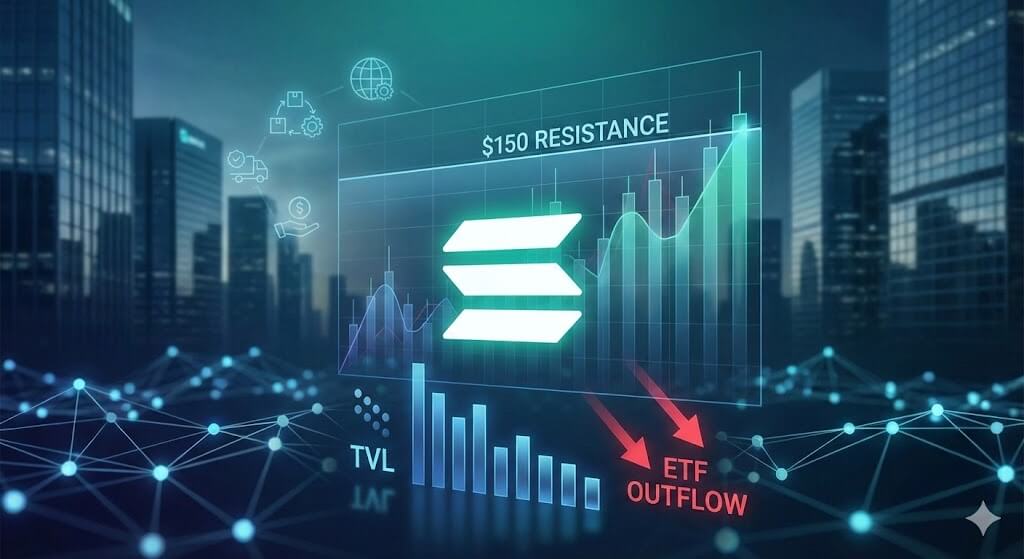
In the dynamic and often unpredictable world of digital assets, understanding the underlying currents that shape market movements is paramount for business professionals, entrepreneurs, and crypto enthusiasts alike. Today, we turn our gaze to Solana, a blockchain platform that has carved out a significant niche with its promise of high-speed, low-cost transactions. However, recent analyses, including a salient report from Cointelegraph, suggest a challenging period for SOL, indicating that Solana’s price is unlikely to break $150 for now. This forecast is not merely a technical blip but a confluence of factors signaling shifts in network health, investor sentiment, and broader market dynamics that have tangible implications for digital transformation, financial innovation, and operational optimization across industries.
Solana emerged as a formidable contender in the blockchain space, often touted as an “Ethereum killer” due to its impressive transaction throughput and minimal fees. Its architecture, designed for scalability, has attracted a vibrant ecosystem of decentralized applications (dApps), NFTs, and decentralized finance (DeFi) protocols. Businesses have explored Solana for use cases ranging from supply chain management and digital payments to gaming and social media platforms, drawn by its efficiency and potential to handle enterprise-level demands. Yet, even the most promising technologies face periods of consolidation and re-evaluation. The current headwinds faced by SOL – weakening network activity, a declining Total Value Locked (TVL), and negative ETF flows – are not just abstract market indicators; they are critical signals for anyone leveraging or considering blockchain technology in their operations.
Key Takeaways
- Solana (SOL) is currently facing headwinds, making a price break above $150 unlikely for now due to multiple market indicators.
- Key contributing factors include weakening network activity, a decline in Total Value Locked (TVL), and negative Exchange-Traded Fund (ETF) flows.
- These indicators signal shifts in network health, investor sentiment, and broader market dynamics, impacting digital transformation and financial innovation.
- Businesses leveraging blockchain technology should exercise strategic patience and thorough due diligence when assessing current and future Solana integrations.
- While challenges exist, Solana’s core technology for high-speed, low-cost transactions remains a significant advantage for operational optimization and long-term potential.
Table of Contents
Understanding the Undercurrents: Why Solana Struggles
The Cointelegraph analysis paints a clear picture: Solana is struggling with recovery. Let’s dissect the key factors contributing to this assessment and explore their broader significance.
Weakening Network Activity: A Bellwether for Utility
At its core, a blockchain’s value proposition is tied to its utility, which is directly reflected in its network activity. Weakening network activity on Solana means fewer transactions, fewer new accounts being created, and potentially less engagement with existing dApps. For a business, this metric is akin to customer engagement or product usage. A decline here can signal several issues:
- Reduced User Adoption: Fewer new users are joining the network, or existing users are becoming less active. This could be due to competition, perceived network instability, or a lack of compelling new applications.
- Stalled Development: Developers might be slowing down the launch of new projects or porting existing ones to other chains, impacting the overall vibrancy of the ecosystem.
- Lower Throughput Demand: While Solana boasts high theoretical throughput, if there isn’t sufficient demand for that capacity, its core advantage becomes less pronounced in practice.
Implications for Business Efficiency and Digital Transformation: For companies investing in blockchain-based solutions, active networks are crucial. If a platform like Solana experiences dwindling activity, it could impact the efficacy of applications built on it. For instance, a supply chain solution relying on Solana for real-time tracking might see reduced data flow or slower adoption from partners if the network’s user base shrinks. Digital transformation initiatives that aim to leverage Web3 for enhanced customer experiences or backend processes require robust and actively utilized underlying infrastructure. A less active network might translate to lower liquidity for NFT markets, reduced engagement for blockchain-based games, or slower processing for payments, directly affecting operational optimization and user experience. Businesses need a thriving ecosystem to ensure long-term viability and growth for their blockchain ventures.
Declining Total Value Locked (TVL): A Measure of Confidence and Capital
Total Value Locked (TVL) represents the aggregate value of all crypto assets deposited into decentralized finance (DeFi) protocols on a particular blockchain. A declining TVL on Solana is a critical indicator for several reasons:
- Erosion of Capital and Trust: When TVL decreases, it often signifies that users are withdrawing their assets from Solana’s DeFi protocols. This can be driven by fears of declining asset prices, concerns about the security of protocols, or simply better opportunities elsewhere. It reflects a dip in confidence in the platform’s financial ecosystem.
- Reduced Liquidity: Lower TVL means less capital available for lending, borrowing, and trading within Solana’s DeFi space. This makes it harder for large transactions to occur without significant price impact and can deter institutional participants.
- Impact on Financial Innovation: DeFi is a cornerstone of financial innovation in the Web3 space. A shrinking TVL directly impacts the ability of Solana-based protocols to experiment with new financial products, offer competitive yields, or attract significant institutional capital.
Implications for Financial Innovation and Operational Optimization: For financial institutions, fintech companies, and entrepreneurs exploring DeFi for innovative lending products, tokenized assets, or new investment vehicles, a robust TVL is essential. A declining TVL on Solana suggests that its DeFi ecosystem may be less attractive for large-scale financial innovation at present. This could push institutional players to explore other chains with higher TVL or more stable growth. Furthermore, businesses looking to utilize Solana for operational optimization, such as micro-payments or treasury management with stablecoins, might face reduced liquidity or higher transaction slippage if the underlying DeFi infrastructure weakens. The health of a blockchain’s TVL is a direct indicator of its capacity to support sophisticated financial operations and drive future financial innovation.
Negative ETF Flows: Institutional Sentiment Shifts
The advent of cryptocurrency Exchange-Traded Funds (ETFs) marked a significant milestone for institutional adoption, providing traditional investors with regulated avenues to gain exposure to digital assets without directly holding them. Negative ETF flows, in the context of Solana, indicate that more capital is exiting Solana-related investment products than entering them. This is a powerful signal:
- Reduced Institutional Interest: Negative flows suggest a cooling of institutional enthusiasm for SOL. This could be due to broader market downturns, specific concerns about Solana’s performance, or a reallocation of funds to other asset classes or cryptocurrencies.
- Impact on Market Perception: Institutional money often provides stability and legitimacy to asset classes. When institutions pull back, it can create a ripple effect, influencing retail investor sentiment and overall market perception.
- Liquidity and Market Depth: While ETFs don’t directly interact with the underlying blockchain, the capital flowing into them contributes to the overall market depth and liquidity of the asset. Negative flows can therefore indirectly reduce the market’s capacity to absorb large buy orders, contributing to price weakness.
Implications for Digital Transformation and Financial Innovation: For corporations and financial entities that view crypto as part of their digital transformation strategy or as a new frontier for financial innovation, institutional interest is a key validation. Negative ETF flows for Solana might lead risk-averse businesses to reconsider direct investments or large-scale integrations, at least in the short term. It signals that even regulated financial products tied to Solana are seeing reduced demand, which can influence how traditional finance perceives the viability and maturity of the Solana ecosystem for future innovation. Businesses looking to tokenize real-world assets or build new financial services on Solana need the backing of strong institutional sentiment to foster broad adoption and investment.
The Classic Chart Pattern: Technical Signals of Downside Potential
The Cointelegraph analysis also mentions a “classic chart pattern that targets $100.” For those less familiar with technical analysis, this refers to specific formations on price charts that historically precede certain price movements. While these patterns are not infallible, they are widely used by traders and analysts to predict future price action based on supply and demand dynamics. A pattern targeting $100 suggests that, from a technical perspective, there’s a strong likelihood of further price depreciation, potentially reaching that level.
Expert Take: “The confluence of on-chain data, dwindling DeFi engagement, and a clear shift in institutional appetite paints a cautious near-term outlook for Solana. While its technological prowess remains undeniable, market dynamics currently dictate a period of re-evaluation for SOL. Businesses should view this as a signal for strategic patience and thorough due diligence when assessing current and future blockchain integrations.”
— Blockchain Strategist, commenting on current market sentiment.
Implications for Strategic Investment and Operational Planning: For businesses and investors holding SOL, or those considering it for treasury management or specific blockchain initiatives, technical analysis provides a crucial layer of insight. A strong technical pattern pointing to lower prices can inform investment decisions, risk management strategies, and even the timing of operational rollouts that depend on the value or stability of SOL. Understanding these technical signals is part of a comprehensive approach to navigating the crypto market, allowing for more informed strategic planning and financial risk mitigation.
Connecting to Broader Business Transformation and Web3 Evolution
While the immediate outlook for SOL might appear challenging, it’s crucial to contextualize these developments within the broader arc of Web3 and digital transformation. The performance of individual blockchain networks like Solana is not just about price speculation; it’s about the health and evolution of an entire technological paradigm.
- Resilience and Competition Drive Innovation: Periods of struggle often force ecosystems to innovate more rapidly. Solana’s team and developers will undoubtedly be looking at ways to reignite network activity, enhance security, and attract new capital. This competitive pressure ultimately benefits the entire Web3 space, leading to more robust and feature-rich platforms. Businesses looking to leverage blockchain should see this as an opportunity to observe how different platforms respond to challenges, identifying those that demonstrate true resilience and adaptability.
- The Maturation of Digital Assets: The ebb and flow of institutional interest, as reflected in ETF flows, is a sign of the increasing maturity of digital assets. They are no longer solely the domain of niche enthusiasts but are being scrutinized with the same rigor as traditional assets. This maturation process is essential for mainstream adoption, though it comes with the volatility inherent in any emerging market. For businesses considering tokenization, digital payments, or new financial instruments, this maturation means a more structured, albeit complex, landscape.
- Operational Optimization Beyond Price: While SOL’s price is a key concern, the underlying technology of Solana still offers significant advantages for operational optimization. Its speed and low cost can dramatically improve efficiency in areas like cross-border payments, supply chain transparency, and data management, irrespective of the token’s short-term price movements. Businesses should focus on the utility and real-world applications of the blockchain itself, rather than solely on the speculative value of its native token, when planning digital transformation initiatives. The core blockchain provides the infrastructure; the token provides the economic incentive and security layer.
- Digital Transformation Requires Due Diligence: The current analysis of Solana underscores the importance of rigorous due diligence for any business embarking on digital transformation using blockchain. Understanding network activity, TVL, institutional sentiment, and technical indicators allows for more informed decision-inaking regarding platform choice, investment, and strategic partnerships. A balanced perspective that considers both the promise and the current challenges of a platform is vital.
Looking Ahead: What to Watch For
Despite the current challenges, Solana’s foundational technology remains compelling. Its high throughput and low transaction costs are significant advantages that will continue to attract developers and businesses looking for scalable solutions. However, the path to widespread enterprise adoption and sustained market growth requires addressing the concerns highlighted in this analysis.
Going forward, businesses and investors should closely monitor:
- Network Activity Metrics: Look for a sustained increase in daily active users, transaction counts, and new wallet creations. These are fundamental indicators of a healthy and growing ecosystem.
- TVL Recovery: A rebound in Solana’s TVL would signal renewed confidence in its DeFi protocols and attract more capital, fostering innovation.
- Developer Engagement: Continued growth in developer tools, new dApp launches, and participation in hackathons are critical for long-term vitality.
- Resolution of Technical Issues: Solana has faced network outages in the past. Ensuring stability and resilience will be crucial for enterprise-grade adoption.
- Broader Market Sentiment: The crypto market is interconnected. A general upturn in the broader market, driven by factors like interest rate changes or regulatory clarity, could provide a tailwind for Solana.
FAQ Section
Q: Why is Solana’s price unlikely to break $150 for now?
A: Solana is facing a confluence of factors including weakening network activity, a declining Total Value Locked (TVL) in its DeFi ecosystem, and negative ETF flows, all of which point to a period of consolidation and re-evaluation.
Q: How does declining network activity affect businesses using Solana?
A: Weakening network activity can indicate reduced user adoption, stalled development, and lower demand for the network’s throughput. For businesses, this impacts the efficacy of blockchain-based applications, potentially leading to lower liquidity, reduced engagement, or slower processing for payments.
Q: What is Total Value Locked (TVL) and why is its decline significant for Solana?
A: TVL represents the aggregate value of crypto assets locked in decentralized finance (DeFi) protocols on Solana. A decline signifies an erosion of capital and trust, reduced liquidity for financial operations, and impacts Solana’s capacity to support sophisticated financial innovation.
Q: What are negative ETF flows and what do they imply for Solana?
A: Negative ETF flows mean more capital is exiting Solana-related investment products than entering. This signals reduced institutional interest, can influence market perception, and indirectly affect the market’s depth and liquidity, potentially contributing to price weakness.
Q: What should businesses watch for to gauge Solana’s recovery?
A: Businesses should monitor sustained increases in network activity (users, transactions), a recovery in TVL, continued developer engagement, resolution of technical stability issues, and positive shifts in broader crypto market sentiment.
Conclusion
The current analysis suggesting that Solana’s price is unlikely to break $150 for now is a crucial piece of information for anyone navigating the intricate world of digital assets. It highlights that even high-performing blockchains face periods of consolidation and re-evaluation. For business professionals, entrepreneurs, and crypto enthusiasts, this isn’t just about a token’s price; it’s a valuable lesson in understanding the multifaceted factors that drive success—and struggle—in the blockchain space.
The weakening network activity, declining TVL, and negative ETF flows are signals that demand attention, reflecting shifts in user engagement, investor confidence, and institutional interest. These factors directly influence the viability of blockchain solutions for business efficiency, the pace of financial innovation, and the trajectory of digital transformation. While Solana’s technological promise remains, its near-term market performance will be heavily influenced by these underlying dynamics. The key for astute observers and strategic planners is to use this information to make informed decisions, demonstrating patience and conducting thorough due diligence as the Web3 landscape continues to evolve. The future of decentralized technology is bright, but its path will always be marked by periods of adjustment and renewed opportunity.