



1.75M Hyperliquid Tokens Unlocked Today, But Was the Price Impacted?
Key Takeaways
- A significant unlock of 1.75 million Hyperliquid tokens occurred today, with immediate negative price impact largely mitigated by proactive and transparent communication from the development team.
- Token unlocks are fundamental to crypto tokenomics, designed to incentivize long-term commitment from team and investors, fund development, and maintain market stability through vesting schedules.
- Effective communication, strong project fundamentals, and robust liquidity are critical factors in managing market sentiment and potential volatility during token unlock events.
- For businesses, understanding tokenomics is crucial for navigating financial innovation in DeFi, adopting Digital Transformation through DAOs, optimizing operations with token incentives, and performing transparent due diligence in Web3 partnerships.
- Token unlocks serve as vital indicators of a project’s maturity, market efficiency, and strategic planning, essential for professionals shaping their organizations’ future in the evolving digital asset landscape.
Table of Contents
- Introduction
- 1.75M Hyperliquid Tokens Unlocked Today, But Was the Price Impacted?
- Understanding Token Unlocks: The Fundamentals of Crypto Supply Dynamics
- The Hyperliquid Case Study: Navigating Community Concerns
- Expert Takes: Perspectives on Tokenomics and Market Impact
- The Broader Implications: Token Unlocks in the Evolving Digital Asset Landscape
- Connecting Crypto & Web3 to Business Imperatives: Efficiency, Innovation, and Digital Transformation
- Navigating the Future: A Strategic Outlook for Professionals
- FAQ Section
- Conclusion
The world of digital assets is in constant motion, a dynamic ecosystem where technological innovation, market sentiment, and carefully designed economic models intersect to shape value. One of the most anticipated and often scrutinized events within this landscape is the “token unlock.” Today, a significant event unfolded in the Hyperliquid ecosystem as 1.75 million of its tokens were unlocked, immediately sparking questions across the community: what does this mean for the project, and more critically, was the price impacted?
For business professionals, entrepreneurs, and crypto enthusiasts alike, understanding such events goes beyond mere speculation; it offers a deeper insight into the underlying mechanics of decentralized finance (DeFi), the strategic planning of blockchain projects, and the evolving maturity of the digital asset market. Token unlocks are not just technical occurrences; they are moments of truth for a project’s tokenomics, testing investor confidence and market resilience. They serve as a crucial touchpoint for assessing project viability, team commitment, and the broader health of a token’s ecosystem, linking directly to themes of financial innovation, digital transformation, and operational optimization in the Web3 era. This article delves into the specifics of the Hyperliquid unlock, unpacks the broader implications of such events, and highlights why these seemingly technical details hold significant relevance for the strategic vision of any enterprise navigating the crypto economy.
1.75M Hyperliquid Tokens Unlocked Today, But Was the Price Impacted?
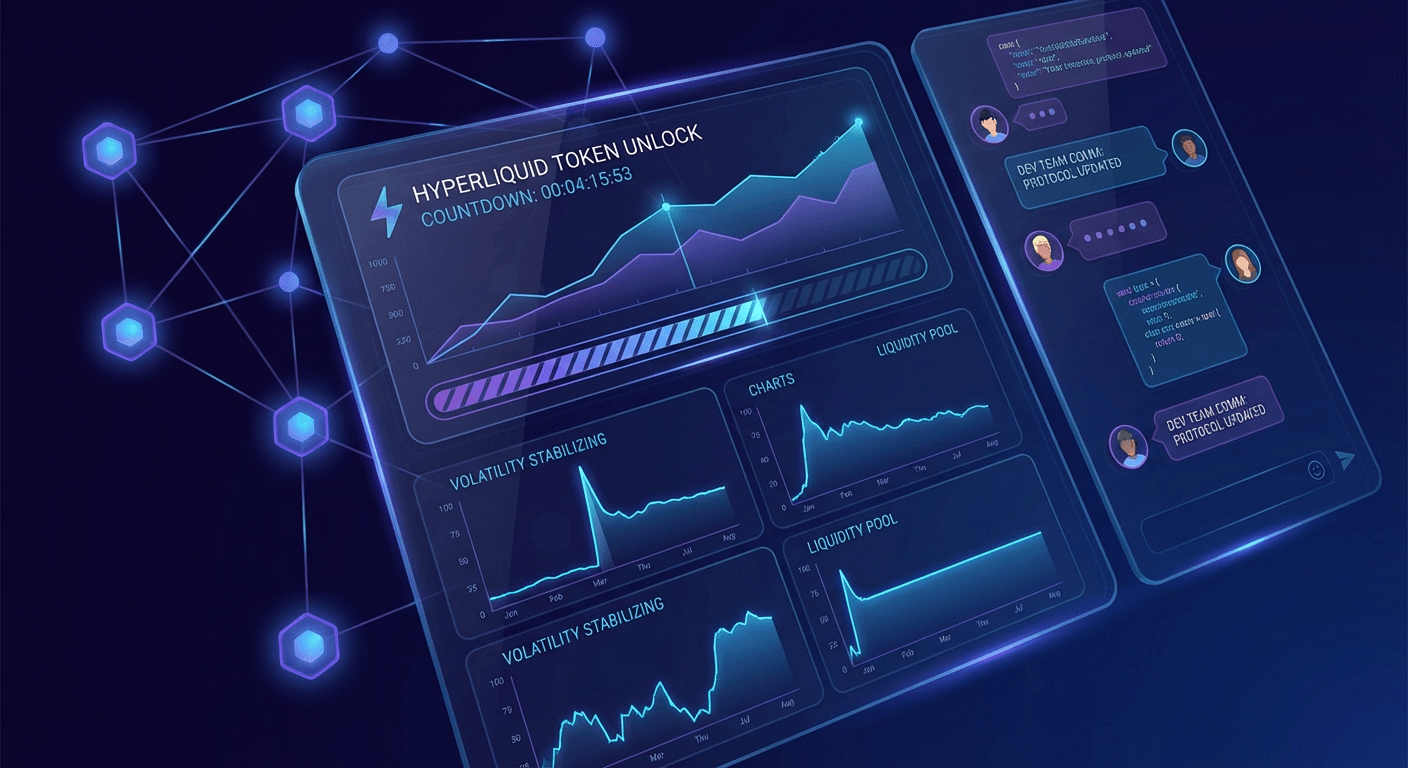
The specific event surrounding Hyperliquid today saw a substantial tranche of 1.75 million tokens transition from a locked, inaccessible state into the active circulating supply. Historically, such events have often been met with apprehension within crypto communities, driven by the fear of increased selling pressure. When a large volume of tokens becomes available, particularly for early investors, team members, or advisors who acquired them at much lower prices, there’s a natural concern that a portion might be sold, leading to a dip in the token’s market price. This perceived risk can create volatility and impact short-term market sentiment.
However, the Hyperliquid development team proactively addressed these community fears. Recognizing the potential for misinterpretation and market panic, they provided timely clarity regarding Saturday’s token unlock. This preemptive communication strategy is a testament to the increasing sophistication and professionalism within the crypto industry. It signals a shift from purely speculative markets to more mature ecosystems where transparency and investor relations are paramount. The initial data suggested that despite the unlock, significant immediate negative price impact was mitigated, potentially due to this clear communication and the broader market’s understanding of Hyperliquid’s long-term vision. This scenario offers a valuable case study in how effective communication can stabilize market sentiment during critical supply-side events.
Understanding Token Unlocks: The Fundamentals of Crypto Supply Dynamics
To fully grasp the significance of events like the Hyperliquid unlock, it’s essential to understand the fundamental concept of token unlocks and their role in the crypto ecosystem. Token unlocks refer to the scheduled release of previously restricted cryptocurrency tokens into the circulating supply. These restrictions are typically implemented through “vesting schedules,” which are pre-determined timelines dictating when certain tranches of tokens held by a project’s team, early investors, advisors, or ecosystem funds become available for sale or transfer.
Why do they happen?
Token unlocks are an integral part of nearly every well-designed blockchain project’s tokenomics – the economic model governing a token’s supply and demand. They serve several critical purposes:
- Incentivizing Long-Term Commitment: Vesting schedules ensure that core team members, developers, and advisors remain committed to the project’s long-term success. Instead of receiving all their tokens upfront, they are released incrementally over months or years. This aligns their incentives with the project’s growth, as the value of their vested tokens appreciates only if the project thrives.
- Rewarding Early Investors: Early-stage investors (seed, private, or strategic rounds) often receive tokens at a discount in exchange for providing crucial capital during a project’s nascent phase. Vesting ensures they don’t simply “dump” their tokens immediately after a public listing, providing a more stable market entry.
- Funding Development and Ecosystem Growth: A portion of the total token supply is often reserved for ongoing development, marketing, grants, community incentives, and strategic partnerships. These tokens are typically locked and released according to a roadmap, ensuring sustainable growth without overwhelming the market with excessive supply at once.
- Market Stability: By controlling the rate at which new tokens enter the market, vesting schedules aim to prevent excessive inflation or sudden supply shocks that could destabilize the token’s price.
Mechanism and Key Metrics:
When tokens are “unlocked,” they move from a non-circulating status to become part of the circulating supply. This is a crucial distinction.
- Circulating Supply: The number of tokens currently available in the market and publicly accessible. This is the figure typically used to calculate a project’s market capitalization (Circulating Supply x Current Price).
- Total Supply: The total number of tokens that have ever been minted, minus any tokens that have been burned.
- Fully Diluted Valuation (FDV): This represents the project’s market capitalization if all tokens in its total supply were in circulation at the current price (Total Supply x Current Price). Comparing market cap to FDV gives investors an idea of potential future dilution and the theoretical maximum value of the project’s token.
A significant unlock event increases the circulating supply, bringing the market cap closer to the FDV, and can exert downward pressure on price if demand does not absorb the new supply. This is why such events are closely monitored by investors and market analysts.
The Hyperliquid Case Study: Navigating Community Concerns
The Hyperliquid unlock of 1.75 million tokens serves as a contemporary example of how a project navigates these supply-side events. Hyperliquid, a decentralized perpetual exchange, operates in a highly competitive and technically demanding segment of the DeFi market. For such a platform, maintaining community trust and investor confidence is paramount.
Upon the announcement or anticipation of the 1.75 million token unlock, the community’s primary concern revolved around the potential for increased selling pressure. In the fast-paced crypto markets, even a slight imbalance between supply and demand can trigger significant price swings. This apprehension is often amplified by previous instances across the industry where unlocks have led to substantial short-term price depreciation.
However, the Hyperliquid development team’s response was crucial. According to Cointelegraph, they provided “clarity on Saturday’s token unlock in response to community fears.” This proactive communication is a best practice in modern crypto project management. By engaging directly with community concerns, providing transparent information about who received the tokens (e.g., team, investors, ecosystem funds), and perhaps detailing the specific vesting schedules or how the funds might be utilized (e.g., for continued development, grants), the team aimed to mitigate adverse speculation. The fact that the article title itself asks “was the price impacted?” implies that the immediate impact was either minimal or absorbed, suggesting their communication strategy was effective in managing expectations and preventing a significant sell-off spiral. This robust approach to investor relations and transparent project management is critical for the long-term success and credibility of any Web3 venture.
Expert Takes: Perspectives on Tokenomics and Market Impact
The way a market reacts to a token unlock reveals much about its maturity, a project’s underlying fundamentals, and overall investor sentiment. Industry leaders and analysts frequently weigh in on these events, offering valuable perspectives that go beyond immediate price movements.
“Vesting schedules are inherently a double-edged sword,” notes Dr. Alistair Finch, a leading blockchain economist. “While they are vital mechanisms for aligning long-term incentives among founders, developers, and early investors, they simultaneously introduce periods of short-term anxiety for the broader market. A well-communicated unlock, however, can actually reinforce confidence by demonstrating a project’s commitment to its long-term roadmap and sustainable growth.”
The effectiveness of communication, as seen with Hyperliquid, is a recurring theme among experts.
Maria Rodriguez, a seasoned DeFi analyst, states, “The market’s reaction to unlocks is increasingly becoming a litmus test for a project’s underlying health and investor confidence. Projects with strong fundamentals, a clear value proposition, and transparent teams are better positioned to absorb unlock events with minimal disruption. Conversely, projects that fail to communicate effectively or have weak community support often face significant volatility.”
Furthermore, experts highlight the evolving nature of the crypto market itself.
“We’re seeing a maturation in how the crypto ecosystem handles unlock events,” comments David Chen, a venture capitalist specializing in Web3 investments. “It’s no longer just about the immediate potential for a dump. Sophisticated investors and market participants are now looking at the broader picture: the project’s development milestones, user adoption, competitive landscape, and the strategic deployment of the unlocked tokens. This holistic view helps differentiate robust projects from speculative ventures.”
These expert takes underscore that while token unlocks are supply-side events, their ultimate impact is deeply intertwined with qualitative factors like team transparency, community engagement, and the perceived long-term value of the underlying blockchain technology.
The Broader Implications: Token Unlocks in the Evolving Digital Asset Landscape
Beyond the immediate price action of a specific token like Hyperliquid, unlock events hold broader implications for the entire digital asset landscape. They are a recurring feature of the market, reflecting the natural life cycle and development phases of blockchain projects.
Project Maturity and Development Cycles:
Token unlocks are milestones. They often coincide with the completion of development phases, the launch of new features, or the achievement of strategic partnerships. As projects mature, their tokenomics models, including vesting schedules, become more refined. The successful navigation of an unlock event can signal a project’s increasing resilience and stability. It demonstrates that the project has a well-defined plan for its token distribution and that its ecosystem can absorb supply increases without capitulating.
Investor Sentiment and Market Efficiency:
The market’s anticipation and reaction to unlocks are a sophisticated dance between psychology and efficiency. Experienced investors often price in known unlock schedules well in advance, leading to less dramatic immediate impact than might be expected. This speaks to the increasing efficiency of crypto markets, where information is quickly disseminated and incorporated into asset valuations. However, unexpected unlocks or a lack of transparency can still trigger significant negative sentiment, underscoring the demand for clear, proactive communication from project teams.
The Role of Liquidity:
Strong market liquidity is crucial in mitigating the effects of token unlocks. If a token has deep liquidity across multiple exchanges, even a substantial influx of new supply can be absorbed without causing a drastic price drop. This is because there are enough buyers ready to acquire the tokens at or around the current market price, balancing the potential selling pressure. Projects that cultivate robust liquidity pools and integrate with major trading platforms are therefore better positioned to handle unlocks.
Comparing Unlocks Across Different Projects and Sectors:
The impact of unlocks can also vary significantly depending on the project’s sector. For a DeFi protocol like Hyperliquid, which relies on active user engagement and capital efficiency, an unlock might be viewed through the lens of potential liquidity provision or ecosystem incentives. For gaming tokens, unlocks might correlate with new game launches or user acquisition strategies. Infrastructure projects might tie unlocks to network upgrades or scaling solutions. Understanding these sector-specific nuances is vital for a comprehensive market analysis. Ultimately, how a project manages its token supply over time is a critical indicator of its long-term health and its capacity to sustain value within its specific niche.
Connecting Crypto & Web3 to Business Imperatives: Efficiency, Innovation, and Digital Transformation
The seemingly technical details of token unlocks and tokenomics are not confined to the realm of crypto enthusiasts; they hold profound implications for business professionals, entrepreneurs, and established enterprises. Understanding these dynamics is crucial for any organization looking to leverage blockchain solutions for financial innovation, digital transformation, operational optimization, and enhanced business efficiency.
Financial Innovation through Decentralized Finance (DeFi):
For businesses, understanding token unlocks and market dynamics is paramount when engaging with the DeFi landscape. Companies exploring new treasury management strategies might look to allocate a portion of their reserves into stablecoins or specific DeFi protocols. Awareness of tokenomics, including vesting schedules and unlocks, helps in assessing the risk profile and long-term stability of these underlying assets. Furthermore, businesses considering launching their own tokenized ecosystems, perhaps for loyalty programs, supply chain financing, or fundraising, must design robust tokenomics that factor in unlock schedules to ensure sustained value and avoid market instability. The Hyperliquid scenario, where effective communication mitigated fears, illustrates a best practice for managing investor relations in a tokenized economy, vital for financial innovation.
Digital Transformation and Decentralized Autonomous Organizations (DAOs):
Blockchain’s core tenets of transparency and immutability, which underpin token unlock schedules, can revolutionize corporate governance and organizational structures. The concept of a DAO, where decisions are made by token holders, offers a radical alternative to traditional corporate hierarchies. For businesses embracing digital transformation, understanding how token distribution (and thus voting power) evolves through unlocks is essential. It impacts how proposals are passed, how development is funded, and how community value is created and distributed. Companies can leverage DAO structures to foster greater stakeholder engagement, decentralize decision-making, and create more agile, digitally native operating models.
Operational Optimization via Token Incentives:
Tokenomics extends beyond mere price speculation; it’s a powerful tool for operational optimization. Businesses can design token incentive models to drive specific behaviors within their ecosystems – whether it’s encouraging user participation, rewarding content creators, or incentivizing data contributions. For instance, a platform might unlock tokens specifically to fund development bounties or grant programs, directly optimizing their R&D and community-driven innovation processes. By carefully structuring unlock schedules and tying them to performance metrics or milestones, organizations can strategically allocate resources and motivate desired actions, leading to more efficient product development, network growth, and ecosystem health.
Enhanced Business Efficiency through Transparent Due Diligence:
For enterprises considering integrating blockchain solutions into their existing operations – perhaps for supply chain visibility, digital identity management, or cross-border payments – thorough due diligence on the underlying blockchain platforms and their associated tokens is critical. Token unlock schedules provide a transparent roadmap of how a project’s supply will evolve, offering insights into potential future volatility and the long-term commitment of its founding team and early investors. Understanding these schedules helps businesses evaluate the economic sustainability and risk profile of blockchain partners, ensuring that their chosen solutions are built on sound financial models. This foresight enables better strategic planning, reduced risk exposure, and ultimately, greater efficiency in the adoption of new technologies. The Hyperliquid team’s proactive communication around its unlock is an example of the transparency businesses should expect and demand when evaluating Web3 partnerships.
Navigating the Future: A Strategic Outlook for Professionals
The Hyperliquid token unlock, while a specific event, serves as a microcosm for the broader dynamics at play in the digital asset industry. For business professionals, entrepreneurs, and anyone with a vested interest in the future of finance and technology, continuous education and strategic foresight are paramount.
The era of Web3 demands a new level of understanding, one that connects technological innovation with economic models and market psychology. Successfully navigating this landscape requires robust due diligence, a keen eye for transparent project management, and an appreciation for the long-term value proposition of blockchain technology, even amidst short-term market fluctuations. Businesses must not only monitor events like token unlocks but also internalize their significance – how they reflect a project’s lifecycle, its governance, and its commitment to sustainable growth.
Embracing Web3 isn’t just about investing in cryptocurrencies; it’s about exploring how decentralized technologies can fundamentally reshape business models, enhance operational efficiency, foster new forms of financial innovation, and drive digital transformation. By staying informed, engaging critically with industry developments, and understanding the intricate interplay of tokenomics and market dynamics, professionals can strategically position their organizations to thrive in the decentralized future.
FAQ Section
What is a token unlock?
A token unlock refers to the scheduled release of previously restricted cryptocurrency tokens into the active circulating supply. These tokens were typically held by a project’s team, early investors, or advisors under a vesting schedule.
Why do token unlocks happen?
Token unlocks are an integral part of a project’s tokenomics. They happen to incentivize long-term commitment from team members and investors, reward early supporters, fund ongoing development and ecosystem growth, and maintain market stability by controlling the rate at which new tokens enter the market.
What is the difference between circulating supply, total supply, and Fully Diluted Valuation (FDV)?
Circulating Supply is the number of tokens currently available and publicly accessible in the market. Total Supply is the total number of tokens ever minted, minus any burned tokens. Fully Diluted Valuation (FDV) is the theoretical market capitalization if all tokens in the total supply were in circulation at the current price.
How did Hyperliquid manage its recent token unlock?
The Hyperliquid development team proactively addressed community concerns regarding the 1.75 million token unlock by providing timely clarity. This transparent communication strategy helped mitigate significant immediate negative price impact and managed market expectations.
Why are token unlocks important for businesses and professionals?
For businesses and professionals, understanding token unlocks is crucial for assessing risk in DeFi investments, designing robust tokenized ecosystems, leveraging DAOs for digital transformation, optimizing operations through token incentives, and performing thorough due diligence on blockchain partners to ensure sustainable financial models.
Conclusion
The release of 1.75 million Hyperliquid tokens today offered a timely reminder of the critical role that token unlocks play within the cryptocurrency ecosystem. While the immediate price impact proved to be contained, largely due to the development team’s transparent communication, the event underscored the continuous need for vigilance and informed analysis.
For businesses and professionals, these events are far more than mere market headlines. They represent tangible indicators of a project’s health, its commitment to its roadmap, and the strategic foresight of its leadership. The mechanics of tokenomics, exemplified by vesting schedules and unlocks, are integral to understanding the long-term viability of decentralized applications, the potential for financial innovation, and the strategic pathways for digital transformation. As the Web3 landscape continues to mature, mastering these concepts will be crucial for operational optimization, enabling enterprises to make informed decisions, mitigate risks, and unlock the immense potential that blockchain technology offers for a more efficient, transparent, and innovative future. Staying informed isn’t just an advantage; it’s a necessity in this rapidly evolving digital frontier.