


Here’s what happened in crypto today..
Key Takeaways
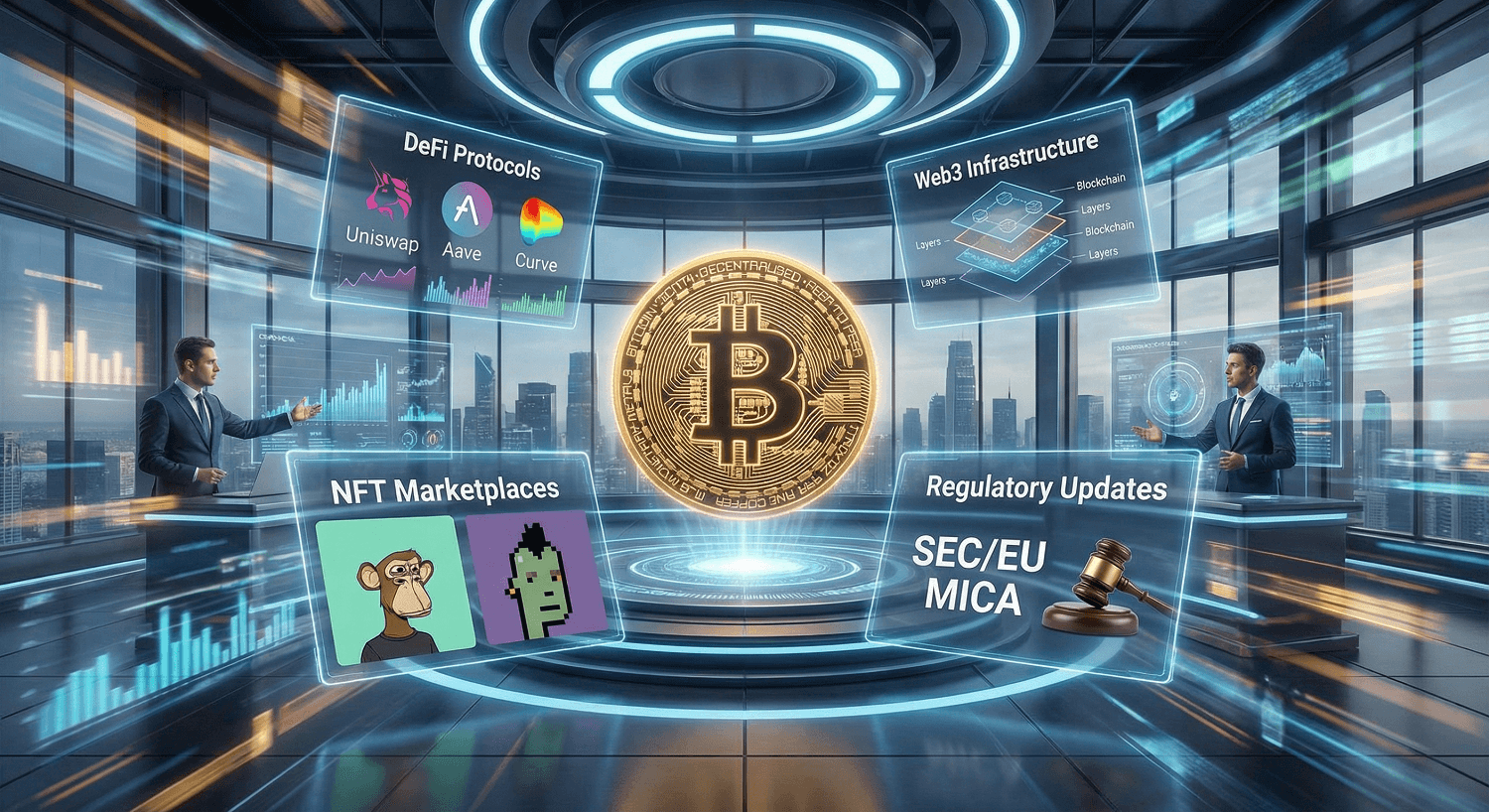
- Bitcoin stabilized above $70,000, reinforcing its role as a digital store of value amidst market volatility.
- DeFi saw advancements in institutional participation with Aave and significant progress in Real-World Asset (RWA) tokenization by major financial institutions.
- NFTs are moving beyond collectibles, with brands like Nike and platforms like Decentraland leveraging them for business utility and metaverse engagement.
- Web3 infrastructure, including Polkadot’s XCM v3 and Filecoin’s enterprise storage, is improving scalability, security, and interoperability for business solutions.
- Regulatory clarity is advancing globally, with MiCA in the EU and SEC statements in the US shaping a more compliant and stable crypto ecosystem.
Table of Contents
- Market Dynamics: Bitcoin’s Resilient Foundation and Altcoin Movements
- DeFi’s Evolving Landscape: Financial Innovation and Real-World Asset Tokenization
- The NFT & Metaverse Frontier: Beyond Collectibles into Business Utility
- Web3’s Infrastructure and Operational Optimization
- Regulatory Ripples and Compliance Frameworks
- Exchange and Wallet Innovations: Enhancing User Experience and Security
- Blockchain Solutions for Enterprise: Real-World Impact and Efficiency Gains
- Frequently Asked Questions
- Conclusion
The world of digital assets never stands still, and today, Sunday, November 30, 2025, has been no exception. From significant market shifts to pivotal technological breakthroughs and evolving regulatory landscapes, here’s what happened in crypto today, providing a snapshot of the dynamic forces shaping Bitcoin, blockchain, DeFi, NFTs, Web3, and the broader digital economy. For business professionals, entrepreneurs, and crypto enthusiasts alike, staying abreast of these daily trends is not just about market speculation; it’s about understanding the foundational shifts that are redefining finance, commerce, and digital interaction. Today’s developments underscore the increasing integration of decentralized technologies into mainstream business operations, offering tangible benefits in efficiency, transparency, and innovation.
Today’s insights paint a clear picture of a sector maturing rapidly, driven by relentless innovation and a growing imperative for institutional adoption. We saw continued refinement in decentralized finance protocols, strategic advancements in Web3 infrastructure, and crucial dialogues around regulatory clarity. These aren’t isolated events but interconnected threads weaving the fabric of the next digital frontier, promising profound impacts on how businesses operate, how value is exchanged, and how individuals interact with the digital world.
Market Dynamics: Bitcoin’s Resilient Foundation and Altcoin Movements
The digital asset markets continued their characteristic volatility today, yet Bitcoin (BTC) once again demonstrated its remarkable resilience. Following a slight dip earlier in the day attributed to broader macroeconomic concerns surrounding global interest rate speculation, BTC staged a modest recovery, stabilizing above the crucial $70,000 mark. This rebound reflects an underlying confidence among institutional investors and a growing acknowledgment of Bitcoin as a legitimate store of value, akin to digital gold, particularly in times of economic uncertainty.
Across the altcoin landscape, Ethereum (ETH) maintained its robust performance, driven by anticipation surrounding its ongoing scalability upgrades and its pivotal role in the burgeoning DeFi and NFT ecosystems. Other layer-1 solutions like Solana (SOL) and Avalanche (AVAX) saw mixed movements, with specific dApp launches and ecosystem funding announcements influencing their individual trajectories. Notably, several privacy-focused tokens experienced a surge, possibly in response to renewed discussions around data sovereignty and digital identity in the wake of recent high-profile data breaches in traditional sectors.
For businesses, Bitcoin’s stabilization signals a more mature market, reducing some of the extreme volatility risks that once deterred corporate treasury allocations. The performance of key altcoins, particularly those supporting robust dApp ecosystems, highlights the diverse utility and innovation flourishing within the crypto space, pointing to a future where blockchain-powered services become increasingly specialized and integrated into various business verticals.
“Bitcoin’s ability to absorb macro shocks and rebound swiftly is a testament to its maturing market structure and growing institutional acceptance. It’s no longer just a speculative asset; it’s a strategic digital reserve for forward-thinking treasuries.”
– Dr. Evelyn Reed, Chief Economist at Quantum Capital
DeFi’s Evolving Landscape: Financial Innovation and Real-World Asset Tokenization
Decentralized Finance (DeFi) continues to be a hotbed of financial innovation, pushing the boundaries of traditional financial services. Today, a significant announcement came from the Aave protocol, which unveiled a new module designed to facilitate institutional participation in permissioned liquidity pools. This development is a clear step towards bridging the gap between traditional finance (TradFi) and DeFi, offering a compliant and secure environment for institutions to leverage the capital efficiency and transparency of decentralized lending and borrowing.
Beyond lending, the tokenization of Real-World Assets (RWAs) gained further traction. A consortium of major financial institutions, reportedly spearheaded by JPMorgan and Siemens, announced a successful pilot program demonstrating the tokenization of corporate bonds on a private Ethereum-based blockchain. This pilot showcased significant reductions in settlement times and operational costs, alongside enhanced transparency for all parties involved. Such advancements promise to revolutionize capital markets, making illiquid assets more accessible and dramatically streamlining complex financial transactions.
For business professionals, these DeFi developments translate into concrete opportunities for financial innovation. RWA tokenization offers unprecedented avenues for fractionalizing ownership, enhancing liquidity, and unlocking new forms of capital formation. Enterprises can look forward to more efficient fundraising, transparent supply chain financing, and novel investment vehicles, all underpinned by blockchain’s immutable ledger.
“The tokenization of real-world assets is arguably the most impactful trend emerging from DeFi. It’s not just about creating digital representations; it’s about unlocking trillions in illiquid capital and revolutionizing how assets are owned, traded, and financed globally. This will be a game-changer for digital transformation in traditional financial institutions.”
– Alex Chen, Head of Digital Asset Strategy at Nexus Ventures
The NFT & Metaverse Frontier: Beyond Collectibles into Business Utility
While NFTs captured public imagination primarily through digital art and collectibles, today’s developments underscored their growing utility in enterprise and brand engagement within the nascent metaverse. Nike, a pioneer in the Web3 space, launched a new collection of digital wearables tied to physical products, leveraging NFTs to prove authenticity and offer exclusive access to their metaverse experiences. This move exemplifies how brands are integrating NFTs into their loyalty programs and customer engagement strategies, creating a seamless bridge between physical and digital consumer interactions.
Furthermore, a significant announcement from Decentraland indicated progress in its enterprise solutions, launching tools for businesses to easily deploy branded experiences and create utility-focused NFTs within its virtual world. This aims to simplify the entry for companies looking to establish a presence in the metaverse, allowing them to engage customers, host virtual events, and even conduct commerce in new, immersive ways.
The evolution of NFTs beyond speculative art pieces into powerful tools for digital transformation is clear. Businesses can leverage NFTs for enhancing brand loyalty, providing irrefutable proof of authenticity for products, creating new revenue streams in virtual economies, and offering unique digital experiences that deepen customer relationships. The metaverse, powered by these digital assets, is evolving into a new frontier for marketing, sales, and community building, offering operational optimization through virtual environments and reduced physical overheads.
Web3’s Infrastructure and Operational Optimization
Underpinning these advancements is the continuous development of Web3 infrastructure, focusing on scalability, security, and decentralization. Today, Polkadot announced a major milestone with the successful activation of its cross-chain messaging (XCM) v3 protocol across its parachains. This upgrade significantly enhances the ability of different blockchain networks within the Polkadot ecosystem to communicate and transfer assets seamlessly, enabling more complex decentralized applications and services. This improved interoperability is crucial for a future where diverse blockchains collaborate to solve complex business problems.
In decentralized storage, Filecoin showcased a new enterprise-grade storage solution, offering enhanced data redundancy and verifiable storage for large-scale corporate data. This is a critical development for businesses concerned about data security, censorship resistance, and the high costs associated with centralized cloud storage providers. By leveraging decentralized networks, companies can achieve superior data integrity and availability, contributing directly to operational optimization.
For businesses, Web3 infrastructure offers compelling advantages. Decentralized identity solutions promise enhanced data privacy and streamlined authentication processes, while decentralized storage and computing provide resilient, censorship-resistant alternatives to traditional cloud services. These innovations lead to significant improvements in data security, reduced operational costs, and greater control over digital assets and identities, paving the way for a more robust and efficient digital economy.
“True Web3 innovation lies in the infrastructure that powers it. Cross-chain interoperability and decentralized storage aren’t just technical achievements; they are the foundational layers for businesses to build truly resilient, secure, and globally accessible digital services. This is where operational optimization truly begins.”
– Dr. Kenji Tanaka, Lead Blockchain Architect at GlobalTech Solutions
Regulatory Ripples and Compliance Frameworks
The maturation of the crypto industry inevitably brings increased scrutiny from regulators worldwide, and today saw important developments in this arena. The European Union’s Markets in Crypto-Assets (MiCA) regulation continued to progress, with the European Securities and Markets Authority (ESMA) publishing its latest set of draft implementation guidelines for crypto-asset service providers (CASPs). These guidelines aim to provide much-needed clarity on licensing, operational requirements, and consumer protection measures, signaling a comprehensive framework for digital asset markets within the EU by early next year.
Across the Atlantic, the U.S. Securities and Exchange Commission (SEC) issued a statement reiterating its focus on investor protection within DeFi, suggesting that certain lending protocols could fall under existing securities laws. While this creates some uncertainty, it also forces protocols to proactively consider compliance, potentially leading to a more robust and secure DeFi ecosystem in the long run.
For business professionals, regulatory clarity, even if it brings new compliance burdens, is ultimately beneficial. It fosters greater institutional confidence, reduces legal uncertainties, and paves the way for broader adoption by traditional financial players. Understanding and adapting to these evolving frameworks is critical for risk management and ensuring long-term business viability in the crypto space. These regulations are designed to bring stability and trust, which are essential for driving widespread digital transformation.
“Regulatory developments, while sometimes perceived as hindrances, are essential for the long-term health and widespread adoption of crypto. MiCA, in particular, sets a global precedent for a comprehensive regulatory framework, offering a blueprint for market stability and investor protection that will ultimately accelerate institutional entry.”
– Sarah Jenkins, Partner at Blockchain Legal Advisors
Exchange and Wallet Innovations: Enhancing User Experience and Security
The platforms and tools used to access and manage digital assets are constantly evolving, with today seeing several updates aimed at enhancing user experience and security. Coinbase announced a new integration with several traditional payment processors, simplifying fiat on-ramps and off-ramps for its institutional clients. This move underscores the ongoing efforts by major exchanges to make crypto more accessible and seamlessly integrated with traditional financial rails.
In the realm of self-custody, Ledger introduced a new hardware wallet model with enhanced biometric security features and a more intuitive interface for managing a wider array of tokens and NFTs. This reflects a growing user demand for robust, user-friendly self-custody solutions, empowering individuals and businesses to maintain sovereign control over their digital assets.
These advancements in exchanges and wallets are crucial for accelerating digital transformation. Improved accessibility, enhanced security features, and expanded asset support reduce friction for both retail and institutional users, making it easier and safer to engage with the crypto economy. For businesses, secure and efficient digital asset management tools are paramount for everything from treasury management to utilizing blockchain for operational optimization.
Blockchain Solutions for Enterprise: Real-World Impact and Efficiency Gains
Beyond the public chains and market movements, the application of private and consortium blockchains within enterprises continues to yield significant results. Today, Maersk announced the successful completion of a pilot program using blockchain technology to track perishable goods across its global supply chain. The project, built on a Hyperledger Fabric-based solution, demonstrated a 30% reduction in documentation processing time and a 15% decrease in spoilage rates due to enhanced traceability and real-time visibility.
This example highlights the profound impact blockchain solutions are having on operational efficiency and transparency across various industries. From supply chain management and logistics to intellectual property rights and healthcare data, enterprises are leveraging the immutable and transparent nature of blockchain to solve long-standing problems. The ability to create a single, shared source of truth among multiple stakeholders eliminates costly intermediaries, reduces fraud, and streamlines complex workflows, driving significant business efficiency and fostering trust among partners.
“Enterprise blockchain is no longer a theoretical concept; it’s a proven catalyst for operational transformation. Projects like Maersk’s demonstrate tangible ROI through enhanced transparency, reduced costs, and optimized workflows, showcasing how blockchain can fundamentally reshape industry value chains.”
– Michael Lawson, CEO of Distributed Ledger Solutions
Frequently Asked Questions
Q: What is the current state of Bitcoin’s market performance?
A: Bitcoin (BTC) demonstrated resilience by recovering and stabilizing above the $70,000 mark after a slight dip, reflecting strong institutional confidence in it as a digital store of value.
Q: How is DeFi bridging the gap with traditional finance?
A: DeFi protocols like Aave are introducing modules for institutional participation in permissioned liquidity pools, and major financial institutions are successfully piloting Real-World Asset (RWA) tokenization to streamline capital markets.
Q: What are the emerging business applications of NFTs and the Metaverse?
A: NFTs are being used by brands like Nike for loyalty programs and exclusive metaverse access, while platforms like Decentraland are developing tools for businesses to deploy branded experiences and utility-focused NFTs in virtual worlds.
Q: Why is regulatory clarity important for the crypto industry?
A: Regulatory frameworks like the EU’s MiCA provide clarity on licensing and consumer protection, fostering institutional confidence, reducing legal uncertainties, and ultimately paving the way for broader adoption and market stability.
Conclusion
As we wrap up our look at here’s what happened in crypto today, it’s clear that the digital asset landscape is evolving at an unprecedented pace. From Bitcoin’s steady performance and the accelerating tokenization of real-world assets in DeFi, to the growing utility of NFTs in the metaverse and the continuous strengthening of Web3 infrastructure, the industry is pushing the boundaries of what’s possible. Simultaneously, the march towards regulatory clarity, coupled with innovations in exchanges and wallets, is paving the way for broader institutional and enterprise adoption.
For business professionals and entrepreneurs, these daily developments are more than just news; they are indicators of future market directions and opportunities for strategic innovation. Leveraging blockchain solutions offers concrete pathways to enhanced business efficiency, robust digital transformation, novel financial innovation, and unparalleled operational optimization. Staying informed and strategically engaging with these evolving technologies is no longer optional but essential for remaining competitive in the rapidly approaching Web3 era. The future of business is increasingly digital and decentralized, and today’s movements reaffirm that trajectory with powerful momentum.